


Custom Printed Burger Pouches: what’s new, what actually works
If you’re serving hot, juicy sandwiches, the quiet hero is often the humble wrapper. I’ve tested more than a few, and these Custom Printed Burger Pouches surprised me for a simple reason: they balance grease control with brand real estate without getting fussy. Origin: Building 1, 710 Lane XinSongjiang Road, Songjiang, Shanghai 201612 — yes, they actually list the address, which I appreciate.
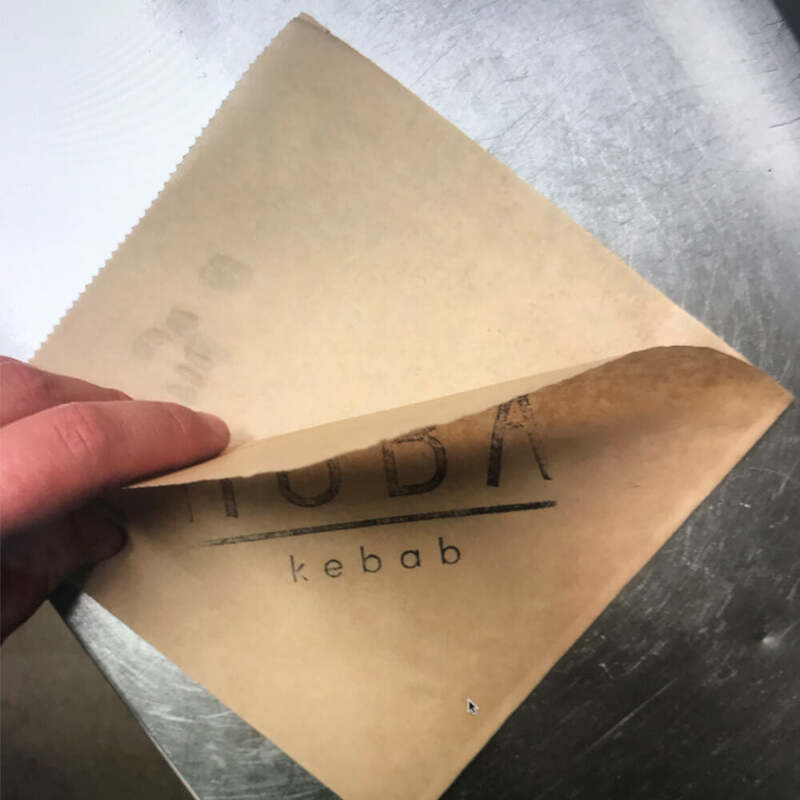
Why operators are moving to paper pouches
Quick-service and food-truck teams keep telling me the same thing: they want a paper-first look that still behaves like “plastic-lite.” In fact, PFAS-free barriers and water-based inks are becoming the default brief, not the premium upsell. And shorter runs are normal now; ghost kitchens don’t want to warehouse a year’s worth of anything.
At-a-glance specs (real-world values)
| Product | Custom Printed Burger Pouches 150×150 mm (≈6"×6"), Brown or White |
| Base material | Greaseproof kraft, ≈32–40 gsm (FSC-eligible); brown or white |
| Barrier | PFAS-free, water-based sizing; Kit value ≈6–8 (TAPPI T559), Cobb60 ≈20–30 g/m² |
| Flexo (up to 4 colors) or short-run digital; Pantone matching ΔE ≈2–3 | |
| Food-contact | Compliant with FDA 21 CFR 176.170/180; EU 1935/2004; BfR XXXVI (vendor docs recommended) |
| Heat & service life | Hot-hold ≈80–90°C short term; shelf life ≈18–24 months in dry storage |
How they’re made (the practical version)
Materials: FSC-grade kraft, food-safe water-based barrier, low-odor inks, and compliant adhesives. Methods: sheet or roll-fed flexo using 250–400 lpi anilox; for smaller campaigns, digital holds color surprisingly well. QC and testing include Kit value (TAPPI T559), Cobb60, sensory/odor checks, and migration screening per FDA/EU frameworks. Honestly, that’s the boring part—until grease bleed shows up in customer photos.
Where they’re used
- QSR and fast-casual burger programs (dine-in and takeout)
- Food trucks and pop-ups—tight counters, fast turnover
- Stadiums and events—high volume, simple pack-out
- Ghost kitchens—short runs, multiple brands in one facility
Advantages I’ve noticed
- Grease control that holds up for a typical 15–30 minute dwell time
- Compact size (150×150 mm) that fits standard 4–5 in buns without bulk
- Branding area that’s big enough for a logo + promo without clutter
- Water-based inks; better odor profile than solvent-heavy runs
Vendor comparison (what buyers actually ask me)
| Vendor | MOQ | Lead time | Certs/Compliance | Notes |
|---|---|---|---|---|
| Bulk Buy Packaging | ≈5,000–10,000 | ≈10–20 days after proof | FDA/EU/BfR docs; FSC option | Balanced price, consistent color control |
| Generic Importer | ≥20,000 | ≈30–45 days | Varies, verify each lot | Lower unit cost; QC can be hit-or-miss |
| Local Printer | ≈500–3,000 | ≈5–10 days | Often good, but limited barriers | Great for pilots; grease resistance may vary |
Customization tips
You can tweak size, paper color, and print layers. Many customers say a single bold logo works best; finer lines can soften on kraft. Ask for ΔE reports, and if you’re picky (no judgment), run a press proof. For Custom Printed Burger Pouches, a one- or two-color design often looks cleaner in real kitchens than a full flood.
Field notes and mini case studies
A food truck in Leeds swapped to Custom Printed Burger Pouches and reported fewer “grease blooms” in customer photos and a 12% quicker wrap time—granted, small sample, but still. Another operator in Dubai used the white stock to pop a green logo; staff said it “felt more premium,” and order accuracy stickers actually adhered better than expected.
Testing, certifications, and what to ask for
- TAPPI T559 Kit value and Cobb60 water absorptiveness
- FDA 21 CFR 176.170/180 or EU 1935/2004 declarations; BfR XXXVI for paper
- ISO 22000/FSSC 22000 for plant hygiene (nice to have)
- FSC claim if you need certified fiber
To be honest, most grease complaints trace back to under-specified barriers or unrealistic hold times. Be clear about hot-hold temps and menu oil content.
References
- TAPPI T559 cm-12: Grease resistance (Kit test) of paper and paperboard.
- FDA 21 CFR 176.170/176.180: Components of paper and paperboard in contact with aqueous and fatty foods.
- EU Framework Regulation (EC) No 1935/2004 on materials intended to come into contact with food.
- BfR Recommendation XXXVI: Paper and board for food contact.
- ISO 22000 / FSSC 22000: Food safety management systems.
- EN 13432: Requirements for packaging recoverable through composting and biodegradation (for claims where applicable).
