


Custom Printed SOS Block Bottom Bags 150 x 100 x 305mm (6x10x12") — field notes from the packaging floor
If you spend any time around bakeries, cafes, or boutique grocers (I do, probably too much), you’ll notice a quiet trend: block bottom paper bags are back, and they’re smarter than ever. To be honest, it’s the mix of stability, brand real estate, and sustainability that’s pushing demand. These compact 6x10x12-inch SOS bags have become the go-to for warm pastries, sandwiches, ground coffee, and small retail items that deserve to stand upright, not slump.
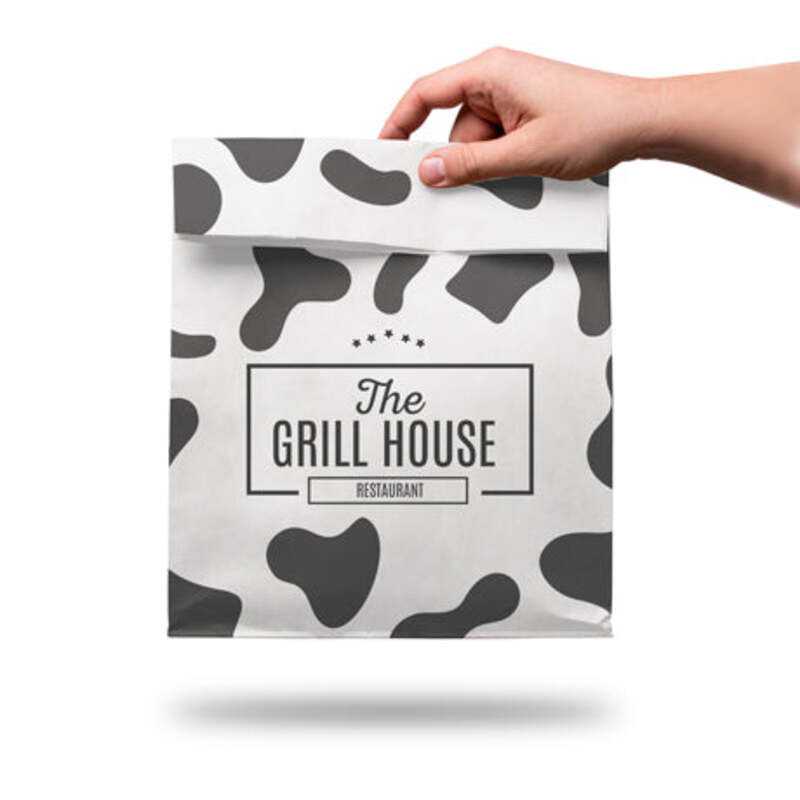
What’s special about this size?
The 150 x 100 x 305 mm footprint fits a surprising range of SKUs—think two croissants, a demi-loaf, cosmetics kits, or a 250–500 g coffee bag. Many customers say it “just works” on crowded counters and small shelves. And the print area? Generous. Actually, a prime canvas for logos, origin stories, and QR codes.
Product specifications (core)
| Dimensions | 150 x 100 x 305 mm (≈ 6 x 4 x 12") |
| Paper Options | Kraft or bleached kraft, 70–100 gsm (real-world use may vary) |
| Printing | Flexographic, up to 6 colors, water-based inks; PMS matching |
| Adhesives | Starch-based, food-contact compliant |
| Load Guidance | ≈ 2–3 kg depending on gsm and moisture conditions |
| Compliance | FDA 21 CFR for paper in contact with food; EU 1935/2004; ISO 22000-ready environments |
From mill to counter: process flow
- Materials: FSC/PEFC-certified kraft reels, 70–100 gsm; water-based inks; starch glue.
- Methods: roll-to-roll flexo printing → drying → SOS automatic bag-making (tube forming, side gluing, block-bottom fold) → QC.
- Testing: COBB60 water absorption; burst strength (≈ 1.8–2.5 kPa range by gsm); tear per TAPPI T414; odor transfer checks; drop tests (ISTA 1A-inspired, in-house).
- Service life: around 24 months in dry storage (≤65% RH); reusability typically 3–5 cycles if kept dry.
- Industries: bakery, café/coffee, deli & takeaway, pharmacy, beauty retail, gifts.
Why operators pick this format
The block bottom stands up—literally. Faster packing, cleaner presentation, fewer toppled items. Branding lands edge-to-edge, which, surprisingly, outperforms stickers for recall in small retail tests I’ve seen. And the sustainability narrative is clearer than with plastics, especially with FSC logos and water-based inks on the spec sheet.
Customization menu
- Papers: natural, white, or tinted kraft; grease-resistant liners for oily bakes.
- Print: full-bleed art, spot colors, QR for allergen info or UTM tracking.
- Features: die-cut windows (PET or compostable films), vent holes for steam, batch codes.
- Cartons & MOQ: around 10–20k typical MOQ; smaller pilot runs on request.
Vendor snapshot (indicative)
| Vendor | MOQ | Lead Time | Certs | Notes |
|---|---|---|---|---|
| Bulk Buy Packaging (Shanghai) | ≈ 10k | 3–5 weeks after proof | ISO 9001/14001, FSC chain-of-custody | Strong color control; export-ready packing |
| Local Printer | 2–5k | 1–3 weeks | Varies | Fast reorders; costlier per unit |
| Overseas Broker | ≥ 20k | 5–8 weeks | Mixed | Lower price; variable QC |
Real-world use: a quick case
A small coastal café switched to Custom Printed SOS Block Bottom Bags 150 x 100 x 305mm (6x10x12") with grease-resistant liners. Result? Staff reported 20–30% faster morning packing (their estimate), and a 12% uplift in Instagram mentions after adding a bold side-panel story and a scannable QR for allergens. Not a lab study, sure, but it tracks with what I hear elsewhere.
Quality, origin, and address
Manufactured and printed at: Building 1, 710 Lane XinSongjiang Road, Songjiang, Shanghai 201612. Every run gets ink drawdowns, registration checks (±0.5 mm typical), and carton drop tests before shipment.
Quick test data (typical, indicative)
- COBB60: ≈ 25–35 g/m² (uncoated kraft), lower with grease-resistant options.
- Burst strength: ≈ 1.8–2.5 kPa (by gsm/spec).
- Print rub resistance: > 4 (dry) on a 5-point scale; wet rub depends on varnish.
If you’re scaling DTC or wholesale, this size is the practical middle ground. And the branding—well, it sells the story when staff are too busy to tell it.
Citations
- FDA, 21 CFR 176.170 – Components of paper and paperboard in contact with aqueous and fatty foods.
- EU Regulation (EC) No 1935/2004 – Materials and articles intended to come into contact with food.
- ISO 22000:2018 – Food safety management systems (applicable to packaging supply chains).
- TAPPI T 414 – Internal tearing resistance of paper (reference for tear performance).
