


In the fast-paced modern life, Plastic Coffee To Go Cups have become a "regular" among urbanites due to their portable and durable features. Whether it's a refreshing drink on the morning commute or a refreshing remedy during afternoon office breaks, these transparent or colored containers carry people's love for coffee. However, beneath the surface of convenience, Plastic Coffee To Go Cups have also sparked many reflections, with its development history and current situation intertwined with the dual propositions of convenience and environmental protection.
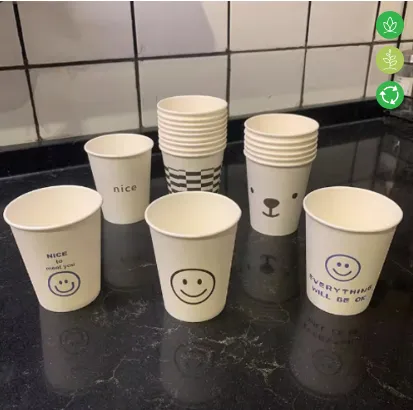
The design of Plastic Coffee To Go Cups embodies considerations of practicality and safety
Plastic coffee cups are often made of food grade plastic materials such as polypropylene (PP) or polystyrene (PS), which have good heat resistance and can withstand the impact of high-temperature coffee without deformation or release of harmful substances. The design of the cup lid is equally exquisite, with a sealing structure to prevent the beverage from spilling out, breathable holes to ensure smooth drinking, and some cup lids also have anti scalding edges, showing humanization in the details. In addition, the smooth surface of the cup body provides an ideal carrier for personalized printing, allowing the brand logo and artistic patterns of the coffee shop to be clearly presented, with both practical and promotional functions.
Plastic Coffee To Go Cups Show Strong Adaptability in Daily Life
In coffee shops, it is the core tool for take out services, where customers do not need to wait for dine in meals and can simply grab their coffee and head to the next destination; Disposable cold coffee cups have become an efficient beverage solution in office buildings, exhibitions, and other venues, meeting the needs of multiple people drinking simultaneously; In some outdoor activities, its lightweight and anti fall characteristics also allow people to enjoy the warmth of hot coffee anytime and anywhere. With these advantages, Plastic Coffee To Go Cups quickly captured the market and became an indispensable part of the global coffee consumption field.
The widespread use of Plastic Coffee To Go Cups has also brought severe environmental challenges
Due to the complex recycling process, most coffee cups are difficult to effectively recycle and dispose of. A large number of discarded plastic coffee tumblers are piled up in landfills or flowing into the natural environment, causing soil pollution, water pollution, and threatening the survival of wildlife. According to statistics, an astonishing number of plastic coffee cups are discarded worldwide each year, and their degradation process can take hundreds of years. This issue has attracted attention from all sectors of society, with environmental organizations and consumers calling for a reduction in the use of disposable plastic products. An environmental change regarding plastic coffee cups is brewing.
Faced with environmental pressure, Plastic Coffee To Go Cups industry actively explores solutions
Some coffee shops have started implementing the "bring your own cup promotion" to encourage consumers to reduce their use of plastic coffee toppers; Significant progress has been made in the research and application of biodegradable materials, with biodegradable coffee cups made from materials such as corn starch and sugarcane bagasse gradually entering the market, attempting to find a balance between convenience and environmental protection; In addition, some cities have introduced policies to restrict the use of disposable plastic products, promoting the industry's transformation towards a greener direction.
The development of plastic coffee tumblers is a microcosm of the collision between modern consumer culture and environmental protection concepts. It has brought great convenience to people's lives and become a symbol of fast-paced life, but it has also been controversial due to environmental issues. With the increasing awareness of environmental protection and technological advancements, Plastic Coffee To Go Cups may gradually exit the historical stage and be replaced by more environmentally friendly and sustainable alternatives. This transformation not only concerns the material selection of coffee cups, but also reflects humanity's unremitting pursuit of a green future.
Plastic Coffee To Go Cups FAQs
Can Plastic Coffee To Go Cups be recycled?
Partially possible, but it needs to be determined based on the material and local recycling policies. Common PP (polypropylene) or PET plastic cups are usually recyclable if they are labeled as recyclable and clean and dry. But cups with plastic coating or residual liquid may not be recyclable.
Why do many coffee shops switch to paper cups instead of Plastic Coffee To Go Cups?
Paper cups are often promoted as more environmentally friendly because they are biodegradable or recyclable (requiring special handling). But the actual environmental friendliness depends on whether it contains plastic coating. Some businesses have switched to paper cups to cater to consumers' preference for "plastic reduction".
Is Plastic Coffee To Go Cups Harmful to Health?
Food grade plastic cups produced in a formal manner are safe under normal use. But avoid storing hot liquids (such as>90 ℃), as high temperatures may release trace amounts of harmful substances (such as BPA, if present).
Is it safe to reuse plastic coffee to go cups?
Disposable plastic cups are not resistant to high temperatures and repeated cleaning, and long-term use can easily wear and breed bacteria. Suggest using eco-friendly cups specifically designed for repeated use (such as stainless steel or glass materials).
How to reduce the environmental impact of Plastic Coffee To Go Cups?
Bring your own reusable cup.
Choose a coffee shop that offers a 'bring your own cup discount'.
If using disposable cups, make sure to properly sort and dispose of them (clean and recycle or dispose of as garbage).
