


Introduction to Advanced Packaging Solutions for QSR
In the dynamic Quick Service Restaurant (QSR) sector, the integrity of food presentation and consumer experience is paramount. Advanced packaging solutions are crucial for maintaining product quality, enhancing brand visibility, and ensuring operational efficiency. Among these, Custom Printed Burger Pouches stand out as a highly effective and versatile option. These specialized pouches are engineered not only to protect the food item from external contaminants and temperature fluctuations but also to serve as a powerful branding tool, directly influencing consumer perception and loyalty.
Our focus here is to delve into the technical aspects, market relevance, and strategic advantages of these tailored packaging solutions, providing B2B decision-makers with comprehensive insights into optimizing their packaging procurement and brand strategies.
Industry Trends Shaping Burger Pouch Demand
The packaging industry, particularly within the food service sector, is undergoing significant transformation driven by several key trends:
- Sustainability Imperative: There is increasing pressure from consumers and regulators for eco-friendly packaging. This translates to demand for pouches made from recyclable, compostable, or sustainably sourced materials, reducing the overall environmental footprint. Brands adopting these practices often see enhanced consumer trust and market positioning.
- Enhanced Brand Storytelling: Packaging is no longer just a protective layer; it's a vital touchpoint for brand communication. High-quality custom printing allows brands to convey their values, promotions, and unique identity directly to the consumer, fostering a deeper connection.
- Food Safety & Hygiene: Post-pandemic, hygiene standards have become more stringent. Sealed pouches offer superior protection against contamination compared to open wraps, ensuring food integrity from kitchen to consumer.
- Operational Efficiency: As labor costs rise and delivery services expand, packaging that is easy to assemble, fill, and transport becomes critical. Optimized designs of burger pouches contribute significantly to streamlined operations, reducing preparation time and potential for errors.
- Customization and Personalization: Brands are increasingly seeking unique packaging designs that reflect seasonal promotions, local events, or special product launches, driving the demand for highly flexible custom printing capabilities.
These trends collectively underline the strategic importance of investing in sophisticated packaging solutions like Custom Printed Burger Pouches that offer both functional excellence and marketing prowess.
Detailed Manufacturing Process Flow for Custom Burger Pouches
The production of high-quality Custom Printed Burger Pouches is a multi-stage process, meticulously controlled to meet stringent food safety and aesthetic standards. The process typically involves material selection, precision printing, lamination, and form-fill-seal operations.
Process Steps and Technical Specifications:
-
Material Selection (Substrate Engineering):
The foundation of a robust pouch lies in its material composition. Common substrates include:
- Paper-based: Often grease-resistant parchment or coated Kraft paper (e.g., 30-60 GSM), providing a natural feel and good print surface. Biodegradable and compostable options are gaining traction.
- Polyethylene (PE): Offers excellent moisture barrier, heat-sealability, and flexibility. Various densities (LDPE, HDPE) are chosen based on required tear strength and clarity.
- Oriented Polypropylene (OPP/BOPP): Provides superior clarity, stiffness, and barrier properties against oxygen and moisture. Ideal for vibrant graphics due to its smooth surface.
- Foil/Metallized Films: Used for enhanced barrier properties against light, oxygen, and moisture, extending shelf life, especially for items requiring thermal insulation.
Materials comply with FDA 21 CFR 170-199 regulations for direct food contact and are often selected based on ASTM F963 for safety.
-
Graphic Design and Pre-press:
Client-provided artwork is optimized for flexographic or rotogravure printing. This stage involves color separation, trapping, and proofing. Adherence to ISO 12647 (Process control for the production of half-tone color separations, proofs and production prints) ensures color accuracy and consistency.
-
Printing Process (Flexography/Rotogravure):
Flexography: Utilizes flexible relief plates and fast-drying inks. Ideal for large print runs, cost-effective for 1-8 color designs. Known for its quick setup and versatility across various substrates.
Rotogravure: Employs engraved cylinders, providing exceptional print quality, fine details, and consistent color saturation, especially for intricate designs and metallic inks. Suitable for very high-volume runs due to high initial cylinder costs but lower running costs.Inks used are food-grade and compliant with regulations such as EU 10/2011 on plastic materials and articles intended to come into contact with food. Drying is crucial to prevent solvent retention and odor transfer.
-
Lamination (Multi-layer Construction):
Printed films are bonded with other functional layers (e.g., PE for sealability, metallized film for barrier) using solvent-based or solventless adhesives. This enhances barrier properties, structural integrity, and resistance to tearing, moisture, and oxygen ingress.
Testing standards include ASTM F1745 for delamination resistance and ASTM F1927 for seal strength to ensure hermeticity.
-
Slitting and Pouch Formation (Converting):
The laminated roll is precisely slit into individual web widths on automated machines. These webs are then fed into high-speed pouch-making machines that cut, fold, and heat-seal the edges (e.g., side seals, bottom gussets) to form the final pouch structure.
Quality checks at this stage include dimensional accuracy (e.g., +/- 1mm tolerance), seal integrity, and visual inspection for defects.
-
Quality Control and Packaging:
Each batch undergoes rigorous quality assurance, including burst testing (ASTM F2054), leak detection, and peel strength analysis. Final products are packaged, typically in corrugated cartons, ready for dispatch.
Our manufacturing facilities operate under ISO 9001:2015 for quality management and often comply with HACCP principles for food safety assurance, guaranteeing consistent product quality and safety.
Simplified Process Flow Diagram (Conceptual HTML Representation)
1. Material Selection
(Films, Paper)2. Printing
(Flexo/Rotogravure)3. Lamination
(Multi-layer bond)4. Converting
(Slitting, Pouching)5. QC & Pack
(Inspection, Dispatch)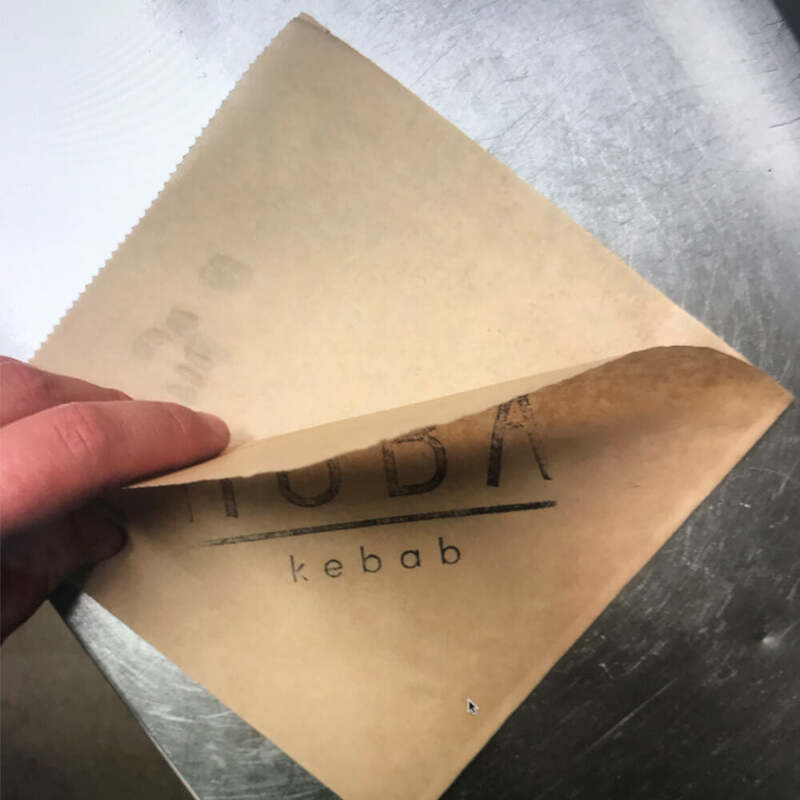
Image: Example of high-quality, custom-printed burger pouches, showcasing vibrant graphics and functional design.
Technical Specifications and Performance Parameters
Understanding the technical specifications of Custom Printed Burger Pouches is critical for procurement managers and product developers. These parameters directly influence performance, food safety, and overall cost-effectiveness.
Typical Product Specifications:
| Parameter | Specification Range | Test Standard |
|---|---|---|
| Material Composition | Grease-resistant paper (30-60 GSM), PE/BOPP laminates, Biodegradable options (PLA/PBS coated paper) | FDA 21 CFR, EU 10/2011, EN 13432 (for compostable) |
| Moisture Vapor Transmission Rate (MVTR) | 2-8 g/m²/24h (for barrier films) | ASTM F1249 |
| Oxygen Transmission Rate (OTR) | 10-50 cc/m²/24h (for barrier films) | ASTM D3985 |
| Grease Resistance | Kit Test Level 5-8 | TAPPI T559 |
| Seal Strength | > 10 N/15mm width | ASTM F88 |
| Heat Resistance | Up to 120°C (for brief holding times) | Internal Protocol |
| Print Resolution | Up to 175 LPI (flexo), >200 LPI (rotogravure) | ISO 12647 |
These specifications ensure that the pouches not only present the brand effectively but also maintain the sensory qualities and safety of the food product, critical for industries such as Quick Service Restaurants (QSR), food trucks, and catering services. The ability to customize these parameters offers tailored solutions for specific product requirements, optimizing for factors like warmth retention, grease protection, and aroma preservation.
Application Scenarios and Strategic Advantages
The versatility of Custom Printed Burger Pouches makes them indispensable across a variety of food service application scenarios, offering distinct technical and operational advantages.
Typical Application Scenarios:
- Quick Service Restaurants (QSR): For dine-in, drive-thru, and takeout. Pouches enhance brand perception, ensure hygiene, and simplify service.
- Food Delivery Services: Crucial for maintaining food temperature and structural integrity during transit, reducing complaints related to soggy or cold food.
- Catering and Events: Facilitates organized and hygienic distribution of individually packed items, especially for large gatherings.
- Gourmet Burger Joints: Allows premium branding to align with high-quality product offerings, justifying higher price points through perceived value.
- Concession Stands: Provides a convenient, branded, and mess-free option for consumers on the go.
Technical Advantages:
- Superior Thermal Retention: Laminated structures, often incorporating insulating layers, help maintain the burger's warmth, crucial for customer satisfaction in delivery scenarios. This reduces energy waste from reheating and improves food quality.
- Grease and Moisture Barrier: Engineered layers prevent grease seepage and moisture absorption, preserving the structural integrity of the bun and preventing sogginess, a common complaint with traditional wraps.
- Enhanced Hygiene and Food Safety: Fully enclosed pouches minimize exposure to external contaminants, significantly reducing the risk of cross-contamination and adhering to strict food safety protocols (e.g., HACCP principles).
- Optimized Stackability & Transport: Uniform pouch sizes and robust materials allow for efficient packing and stable stacking in delivery bags, minimizing damage during transport.
- Vibrant, High-Definition Printing: Utilizes advanced printing technologies (flexo, rotogravure) to reproduce complex graphics and brand logos with exceptional clarity and color fidelity, maximizing visual impact.
- Material Versatility for Sustainability Goals: Options for compostable (e.g., PLA-lined paper) or recyclable materials help businesses meet their environmental commitments without compromising performance.
These advantages directly translate into improved customer experience, reduced operational costs, and strengthened brand equity for businesses utilizing bespoke Custom Printed Burger Pouches.
Vendor Comparison: Standard vs. Specialized Pouch Solutions
Choosing the right vendor for packaging solutions, especially for critical items like burger pouches, requires a careful evaluation of capabilities, quality standards, and service offerings. The distinction between general packaging suppliers and specialized manufacturers of Custom Printed Burger Pouches is significant.
Comparison Table:
| Feature/Capability | Standard Packaging Supplier | Specialized Custom Pouch Manufacturer |
|---|---|---|
| Material Expertise | Limited range, generic options (e.g., basic paper/plastic) | Advanced laminates, barrier films, sustainable options (e.g., compostable PLA), specific grease-resistant coatings |
| Printing Technology | Basic offset/digital, often for simpler designs | High-definition Flexography (up to 8 colors), Rotogravure for photographic quality, color matching to Pantone standards |
| Food Safety Certifications | Basic compliance (e.g., general food contact safe) | ISO 22000, HACCP, BRCGS Packaging, FDA/EU direct food contact compliance |
| Customization Depth | Limited sizes, few design options | Full range of sizes, shapes, material combinations, closure types, and design elements; structural engineering support |
| Technical Support & R&D | Minimal; order fulfillment focus | Dedicated R&D team for new material development, barrier optimization, performance testing, and sustainability consulting |
| Lead Time & Flexibility | Standard lead times, less agile for urgent needs | Optimized production lines for faster turnaround, ability to handle complex orders and offer inventory management solutions |
For businesses prioritizing brand integrity, food safety, and operational efficiency, partnering with a specialized manufacturer of Custom Printed Burger Pouches offers undeniable advantages. Such vendors bring extensive expertise in material science, printing technology, and regulatory compliance, ensuring a product that not only meets but exceeds industry benchmarks.
Customized Solutions & Design Flexibility
The strength of Custom Printed Burger Pouches lies in their adaptability to specific brand requirements and operational needs. Our approach to customization ensures that every pouch is a unique extension of your brand.
Customization Options Include:
- Material & Barrier Properties: From basic grease-resistant paper to advanced multi-layer laminates with high oxygen and moisture barriers (e.g., EVOH, PVDC), tailored for specific shelf-life and thermal performance requirements.
- Size & Form Factor: Precision-engineered to fit various burger sizes, from sliders to specialty gourmet builds. Options include flat pouches, gusseted pouches, or specific folding designs for ease of use.
- Printing & Graphics: Full-color, edge-to-edge printing with photographic quality, utilizing CMYK and spot (Pantone) colors. Special effects like matte/gloss finishes, metallic inks, or tactile varnishes are available to enhance brand appeal.
- Eco-friendly Options: Biodegradable, compostable (EN 13432 certified), or recyclable material choices that align with corporate sustainability goals without compromising performance.
- Functional Enhancements: Features like easy-open tear notches, re-sealable closures for portion control, or ventilation holes for steam release (if applicable) can be integrated based on product characteristics.
Our expert design and engineering teams collaborate closely with clients to develop solutions that address unique challenges, ensuring optimal functionality, aesthetic appeal, and cost-effectiveness.
Application Case Studies: Real-World Impact
Case Study 1: Major QSR Chain Brand Revitalization
A leading international QSR chain, with over 3,000 outlets, faced challenges with inconsistent branding and compromised food quality during delivery using generic wraps. The objective was to enhance brand recognition and improve customer satisfaction for their flagship burger products.
- Solution Implemented: We developed a bespoke Custom Printed Burger Pouches solution. This involved a multi-layer laminated paper/PE pouch with high-definition flexographic printing for vibrant brand reproduction and an enhanced grease barrier. The pouch was designed with specific dimensions to snugly fit their signature burger, improving presentation.
- Results Achieved: Post-implementation, the QSR chain reported a 15% increase in positive customer feedback regarding food presentation and warmth retention. Brand consistency across all outlets significantly improved, contributing to a 5% uplift in repeat purchases, as tracked through their loyalty program. The average cost per unit saw a marginal increase, but was offset by reduced waste from damaged product and enhanced brand value.
Case Study 2: Eco-Conscious Gourmet Burger Brand Launch
A new gourmet burger brand aimed to differentiate itself with a strong commitment to sustainability, requiring packaging that was both premium and environmentally responsible. Their challenge was finding a compostable solution that didn't compromise on barrier performance or print quality.
- Solution Implemented: We engineered a specialized compostable Custom Printed Burger Pouches using a PLA-coated Kraft paper substrate. This material met EN 13432 certification for industrial composting while providing adequate grease resistance and thermal properties. The design incorporated a minimalist yet striking brand graphic using water-based, food-safe inks.
- Results Achieved: The brand successfully launched with packaging that perfectly aligned with its sustainability ethos. Customer feedback consistently highlighted the innovative and eco-friendly packaging as a key differentiator. The brand achieved rapid market penetration, exceeding initial sales forecasts by 20% in its first year, partly attributed to strong positive media coverage of their sustainable packaging choices.
These case studies underscore our commitment to delivering tangible value through technically superior and strategically aligned packaging solutions for diverse business needs.
Frequently Asked Questions (FAQ)
Q: What is the minimum order quantity (MOQ) for Custom Printed Burger Pouches?
A: Our MOQ typically starts from 10,000 units, depending on the complexity of the design and chosen materials. We offer flexible solutions and encourage clients to discuss their specific volume needs with our sales team.
Q: What are the lead times for production and delivery?
A: For custom orders, the standard lead time from final artwork approval to dispatch is typically 4-6 weeks. This includes plate making, printing, lamination, converting, and quality control. Expedited options may be available for urgent requirements, subject to project specifics and current production schedules. Shipping times vary based on destination and chosen logistics.
Q: Do you offer samples of custom pouches?
A: Yes, we provide generic samples of our pouch materials and finishes upon request. For custom-printed prototypes, a pre-production sample run can be arranged, though this may incur additional costs for plate/cylinder setup.
Q: What is your warranty policy for packaging products?
A: We stand behind the quality of our products. All Custom Printed Burger Pouches are warranted against defects in material and workmanship for a period of 12 months from the date of delivery, provided they are stored and used under recommended conditions. This warranty covers manufacturing faults and material integrity issues that deviate from agreed specifications. Full terms and conditions are available upon request.
Q: What kind of after-sales support do you provide?
A: Our commitment extends beyond delivery. We offer comprehensive after-sales support including technical assistance for packaging machine compatibility, material performance queries, and troubleshooting. A dedicated account manager is assigned to ensure continuous client satisfaction and facilitate any re-orders or new project development. We also conduct periodic reviews to ensure our solutions continue to meet evolving client needs.
Commitment to Quality and Client Partnership
Our organization has been a trusted partner in advanced flexible packaging for over 15 years, serving a diverse portfolio of B2B clients ranging from emerging food brands to multinational QSR enterprises. We pride ourselves on certifications such as ISO 9001:2015 for Quality Management Systems and active compliance with HACCP principles and FDA regulations for food contact materials.
Our rigorous internal testing, coupled with third-party verification, ensures that every batch of Custom Printed Burger Pouches meets the highest standards of safety, performance, and aesthetic quality. We are dedicated to fostering long-term partnerships built on reliability, innovation, and mutual growth.
References
- FDA. (2023). 21 CFR Parts 170-199 - Indirect Food Additives: Polymers. U.S. Food and Drug Administration.
- ISO. (2023). ISO 9001:2015 - Quality management systems – Requirements. International Organization for Standardization.
- ASTM International. (2023). Various standards for flexible barrier materials (e.g., F1249, D3985, F88). ASTM International.
- European Commission. (2011). Commission Regulation (EU) No 10/2011 on plastic materials and articles intended to come into contact with food. Official Journal of the European Union.
- Cobb, J. (2022). The Evolution of Sustainable Packaging in the Food Industry. Packaging World Journal, Vol. 28, No. 3, pp. 45-52.
