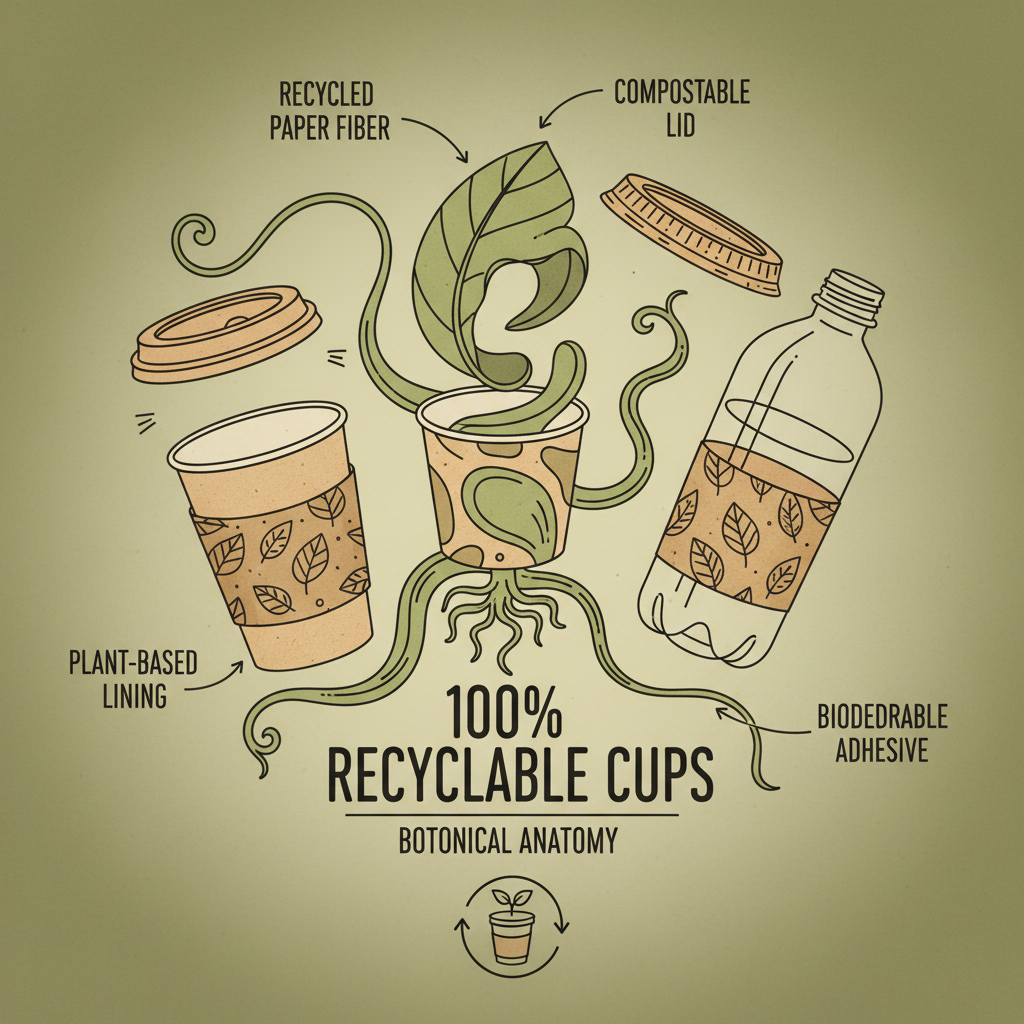
Look, 100% recyclable cups. Honestly, it's been a whirlwind year. Everyone's chasing "green," right? Not just marketing buzz, but real stuff. Been seeing a ton of PLA and molded fiber popping up on sites. It's not just about the cups themselves anymore, it’s about the whole supply chain - the lids, the sleeves, even the inks they use. A lot of folks think 'recyclable' means throw it in any bin and it's sorted, but that’s… optimistic, shall we say.
I've been wrestling with this for ages, trying to get folks to understand it's not just about using recycled content—that's a good start—but designing for actual recyclability. You know, things like avoiding mixed materials, making sure the coatings don’t mess up the paper pulping process. It's a whole can of worms.
The demand’s there, though. Pressure’s coming from everywhere - consumers, big chains, even the local coffee shop down the street. They're all asking for alternatives to traditional plastic. And frankly, it’s about time.
The Current Landscape of 100% Recyclable Cups
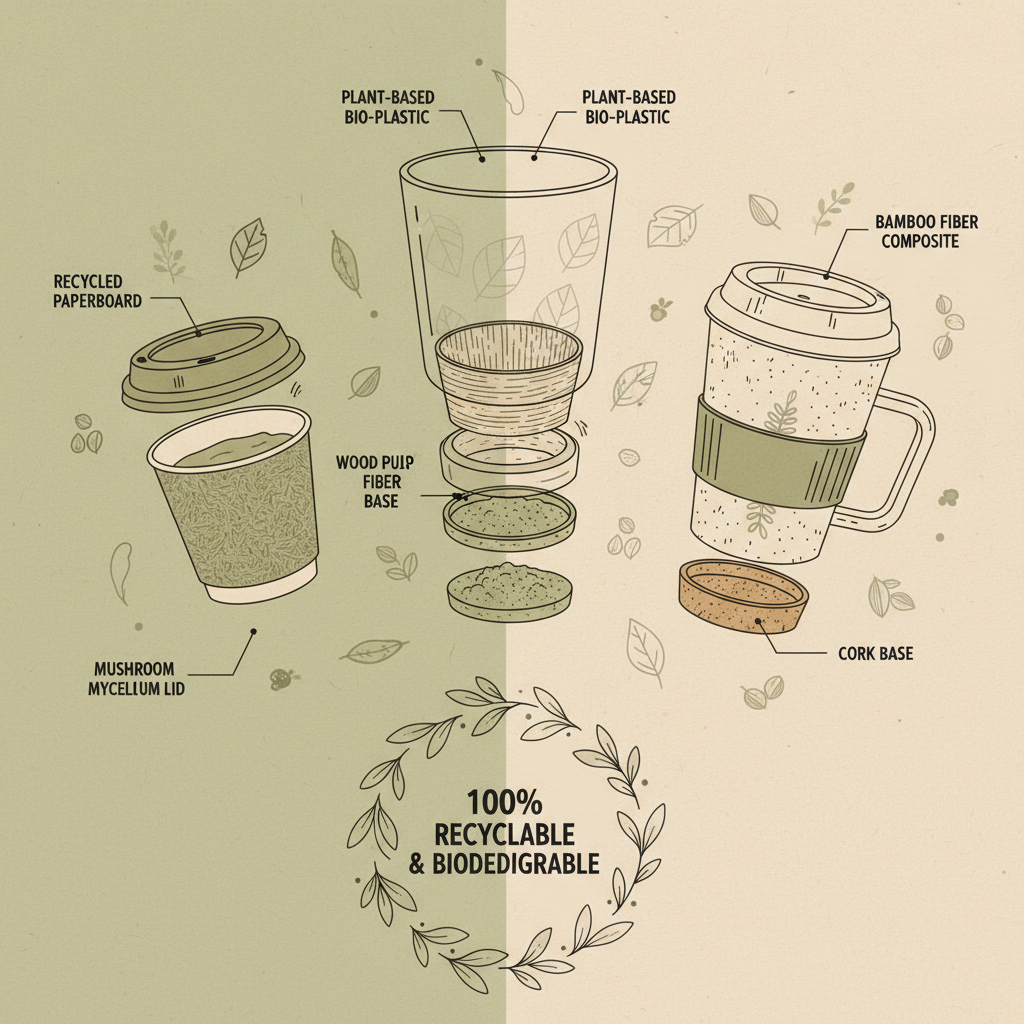
Have you noticed how much attention molded fiber cups are getting? They’re basically made from recycled cardboard, and when done right, they feel… well, cardboard-y. But sturdy. There's a slight smell, kinda like a paper mill, especially when they're new. You gotta handle them carefully when they're wet, though, they can get flimsy. PLA’s different. Feels smoother, more like plastic, but you gotta be careful about the heat – they’re not great for super-hot liquids.
The big push now isn't just about using recycled content, it’s about designing for end-of-life. It’s about making sure these cups actually get recycled and don’t just end up as landfill. That means simpler materials, fewer coatings, and clear labeling.
Design Pitfalls and Material Considerations
To be honest, a lot of designers don't spend enough time on the ground, seeing how things actually get handled. I saw a design last month with a beautiful, multi-layered coating for “leak-proof” performance. Sounded great on paper. But the recycling plant couldn't touch it – the coating contaminated the whole batch of paper pulp. Waste of everyone's time and money. Strangely, the simpler designs, the ones that prioritized recyclability upfront, performed almost as well in real-world use.
The biggest trap is thinking “bio-based” automatically means "eco-friendly". PLA, for instance, requires industrial composting facilities to break down properly. Most cities don’t have those. So, it ends up in the landfill anyway. And the energy required to make some of these materials… well, let’s just say it’s not always as green as people think.
Then there are the lids. They're often made of polypropylene (PP) which isn't easily recyclable with the cup itself. We’re seeing some progress with PP alternatives, but they're still pricey and not always as durable.
Real-World Testing and Application
You know, lab tests are fine, but they don’t tell the whole story. I encountered this at a beverage factory last time. They were running fancy drop tests and compression tests, but hadn’t tested how the cups handled being stacked on pallets for weeks during shipping. Cups were getting crushed. Real-world testing means stacking them, dropping them (not from a controlled height, but from a forklift!), filling them with hot coffee, leaving them in the sun…the works.
I've seen these cups used everywhere, from fast-food chains to corporate events, to post-disaster relief. In the relief scenarios, durability is key. You need something that can hold water without leaking, even if it gets tossed around a bit. We were in Puerto Rico a few years back, and the simple molded fiber cups held up better than some of the more "high-tech" options.
I saw one client try to use these for hot soup in winter at an outdoor event. Disaster. The cups just weren’t up to the task. You gotta pick the right material for the application, period.
Performance and Customization Options
Anyway, I think the performance of these cups is getting better all the time. The molded fiber ones are getting stronger, and the PLA ones are becoming more heat-resistant. But they’re still not going to replace traditional plastic in every application. There are trade-offs.
Customization is possible, but it adds cost. You can do custom printing, of course. But altering the shape or adding complex features can be tricky and often compromises recyclability.
Recyclability Factor Comparison
Common Material Properties
You get used to knowing what materials feel like. Molded fiber? Rough, a little gritty. PLA? Smooth, almost waxy. Paper with a PE lining? You can tell immediately, it’s that slick, waterproof feeling. And that PE is the killer when it comes to recycling.
The weight matters too. The thicker the material, the stronger it is, but also the more resources it takes to produce. It's a balancing act.
User Behavior and Unexpected Applications
Here's a funny thing I've noticed. People tend to treat 100% recyclable cups like they're disposable, even when they’re not. They'll crumple them up, throw them on the ground…It’s frustrating, but it highlights the need for better education and clearer labeling.
I even saw a construction crew using molded fiber cups to start seedlings in their greenhouse. Said they worked better than plastic pots and they could just compost them when they were done. Never would have thought of that!
A Recent Customer Case Study
Last month, that small boss in Shenzhen who makes smart home devices insisted on changing the interface to , and the result was a whole production line shutdown because he hadn’t accounted for the sourcing and lead times. Similar thing happened with a coffee chain. They wanted to switch to fully compostable cups, but hadn't checked if their local composting facilities could handle them. Ended up with a mountain of cups nobody could process.
It’s always the details.
Key Material Performance Characteristics
| Material Type |
Durability (1-10) |
Recyclability (1-10) |
Cost (Low/Medium/High) |
| Molded Fiber |
7 |
9 |
Low |
| PLA |
6 |
4 |
Medium |
| Paper w/ PE Lining |
8 |
2 |
Low |
| Bagasse |
5 |
7 |
Medium |
| Coated Paper |
7 |
3 |
Low |
| CPLA |
6 |
5 |
High |
FAQS
People assume 'compostable' means they can throw it in their backyard compost bin. Most require industrial composting facilities with high heat and specific conditions. Without that, they just sit there and don't break down. It’s a huge problem. A lot of marketing makes it seem simpler than it is.
We fill them with hot liquid – coffee, soup, whatever the application is – and then throw them around. Seriously. Drop them, stack them, put them in a backpack. We've even had interns run with them. It's not glamorous, but it's the most reliable way to see how they’ll hold up in real life.
Right now, generally, they're more expensive. It varies depending on the material and volume, but you're looking at anywhere from 20% to 100% more. But the price is coming down as demand increases and production scales up. Plus, you’ve got to factor in the cost of waste disposal—landfill fees are going up all the time.
Yes, but you have to be careful with the inks. Soy-based inks are a good option, but some colors can still interfere with the recycling process. We always recommend testing the printed cups to ensure they meet recyclability standards. Avoid metallic inks entirely – they’re a nightmare.
Molded fiber cups can get moldy if stored in damp conditions, PLA can become brittle, and paper cups with PE linings lose their integrity. Proper storage in a dry, cool place is essential. It’s not something people often think about, but it's important, especially if you’re buying in bulk.
Look for certifications like BPI (Biodegradable Products Institute) for compostability, and check if the manufacturer has third-party testing data to verify recyclability claims. Forest Stewardship Council (FSC) certification ensures the paper is sourced responsibly. It’s not a perfect system, but it’s a good starting point.
Conclusion
So, 100% recyclable cups… it's complicated. There’s no silver bullet. It's about making informed choices, understanding the trade-offs, and designing for the entire lifecycle of the product. It’s not just about finding a “green” alternative, it's about building a more sustainable system.
Ultimately, whether this thing works or not, the worker will know the moment he tightens the screw. And if he’s shaking his head, you know you've got a problem. Visit us at bulkbuypackaging.com to learn more.